FREE · TWICE WEEKLY The Feed Brief.ANIMAL FEED · NUTRITION · HEALTH Tuesday, November 17, 2026 · Issue #4 | ||
In today's edition:
| ||
 | ||
Oilseeds · Companies 🏭 ADM is putting more than $60 million into its Decatur oilseed plantADM said Monday it will spend more than $60 million on five projects at its Decatur West oilseeds plant in Illinois, the company's largest operating site and its North American headquarters. The work is aimed at reliability, safety and efficiency: upgrades to key processing units, plant-wide process controls, and the replacement of firefighting foam that contains PFAS. ADM did not give a construction timetable or say whether the projects add crush capacity. Chris Cuddy, who leads the company's North American business, tied the spending to Decatur's place in the Corn Belt and to keeping the site competitive. The announcement sits on top of a June plan to invest at least $103 million across the wider Decatur complex, and of other U.S. upgrades, including more corn processing in Nebraska and more crush capacity at several plants. Key Points:
| ||
 | ||
Poultry 🥚 Egg farms are back to full strength and selling at a steep lossThe U.S. laying flock has recovered from bird flu losses, and now the problem is the opposite one. Egg Industry Center figures show September's table-egg flock averaged 319.5 million hens, 15.5 million more than a year before, with output up 6.5%. At the same time, layer rations cost 18% more in October than a year earlier, driven by a 28% jump in soybean meal and a 14% rise in corn. The result: a dozen conventional white eggs was worth about 27 cents at the farm in October, against a production cost near 81 cents, roughly a third of breakeven. Feed alone made up close to 39 cents of that cost. Key Points:
| ||
 | ||
Beef · Earnings 🥩 Tyson braces for another rough beef year as cattle stay scarceTyson Foods closed fiscal 2026 with sales of about $56.4 billion, up 3.6%, but adjusted operating income slid 14% to just under $2 billion, and fourth-quarter adjusted earnings per share were nearly cut in half. For 2027, the company expects sales to drop 3.5% to 5.5%, mainly because its beef division will process fewer cattle after plant restructuring and a still-tight cattle supply. Beef guidance spans a $300 million loss to a $100 million profit, while chicken is expected to carry the company again at $1.3 billion to $1.6 billion. USDA sees U.S. beef output down about 2% next year, with pork roughly flat and chicken up about 1%. Key Points:
| ||
 | ||
Companies · Legal ⚖️ A $203 million wage settlement lands on Tyson, JBS and CargillA federal judge in Colorado gave final approval on Nov. 13 to $202.8 million in settlements covering wage-fixing claims against major U.S. beef and pork processors. U.S. District Judge Philip Brimmer signed off on 13 deals involving companies that include Tyson Foods, JBS USA, Cargill and Perdue Farms, in a case that reaches about a million plant workers. The 2022 lawsuit alleged that processors shared pay information and coordinated to hold down wages and benefits at plants from 2000 through 2024. The companies deny wrongdoing and said they settled to end the litigation. The Justice Department had objected that the agreements don't do enough to stop the same conduct from happening again; the judge declined to let the department argue at the hearing but said he would weigh those concerns. A separate Smithfield Foods deal is still waiting for court approval. Key Points:
| ||
 | ||
Swine · Disease · Research 🐗 GPS collars on 700 wild boar show how ASF creeps, and when it jumpsThe European Food Safety Authority pooled high-resolution tracking data on roughly 700 wild boar living in ASF-free areas of 13 European countries, gathered through the EUROBOAR project. Most animals stayed put: over a typical two-week window, a boar used an area of about 2.4 square kilometres, which fits the slow, neighbour-to-neighbour way the disease usually advances. A few individuals, though, covered as much as 60 km in the same span. Boar whose ranges overlapped pig farms came within 50 metres of a farm in about one of every five two-week periods. A separate look at surveillance records linked denser boar populations to faster spread into new ground, and warmer minimum temperatures to fewer positive carcasses and shorter outbreaks. Key Points:
Why it matters: It gives pig farms near infected forests hard numbers on how often boar come right up to the fence.
| ||
 | ||
Dairy · Markets 🧀 Cheese plants are chasing whey, and Class III milk checks are slippingDemand for whey protein is strong enough that U.S. cheese plants are running full just to produce more of it. Corey Geiger, CoBank's lead dairy economist, told Farm Progress that whey protein isolate and concentrate 80 now make up 77% of whey protein output, and prices are holding even as production hits records. What used to be a leftover can now be worth as much as the cheese itself. The squeeze shows up in the milk check: October's Class III price fell to $15.16, an eight-month low, while Class IV rose to $20.54, a $5.38 gap. Cheese output is up 6.9% from two years ago, after new plants that can take in 10 million pounds of milk a day came online, and a herd that has grown by more than 350,000 cows since January 2025, to 9.7 million. Key Points:
| ||
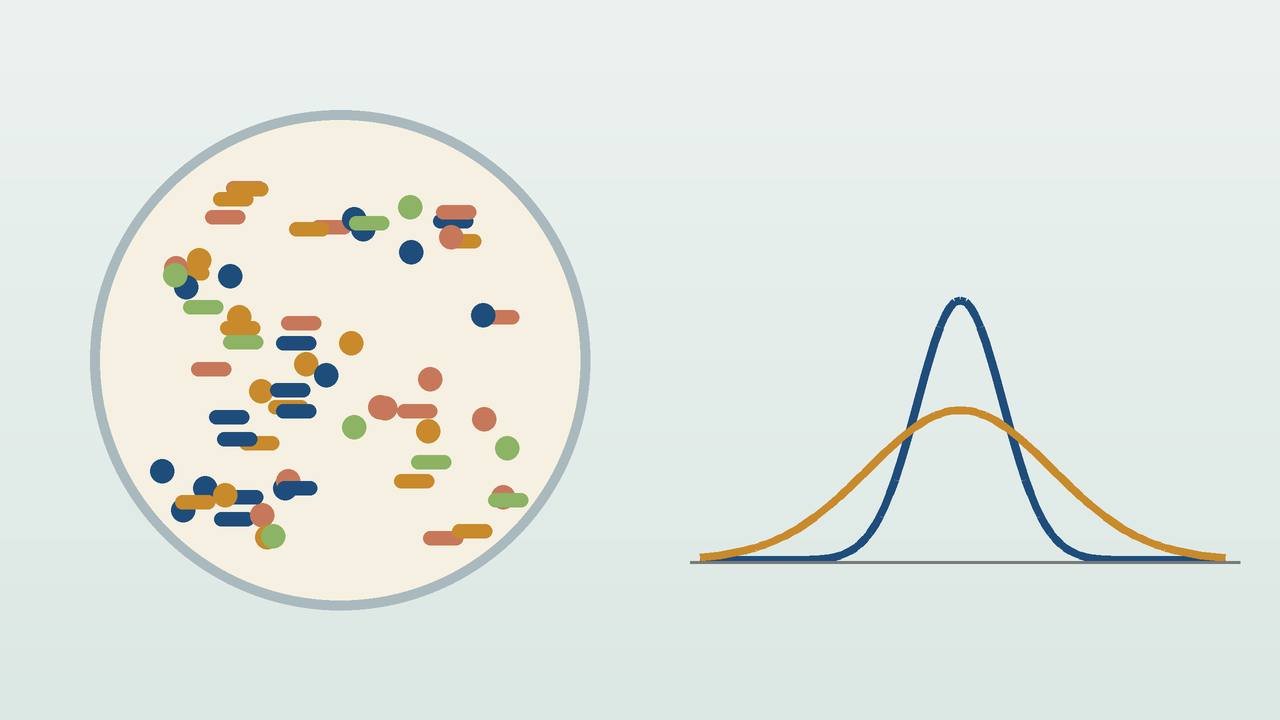 | ||
Additives 🦠 Probiotics aren't broken; we're grading them on the wrong testNutrition consultant Ioannis Mavromichalis takes on a complaint he keeps hearing from big poultry integrators: they've tried nearly every commercial probiotic, and field results still bounce around. His argument is that this should be expected. A probiotic is a live organism that has to survive pelleting, storage and the trip through the gut, and then it lands in birds, barns, diets and disease pressures that are never quite the same from one flock to the next. Judging these products like synthetic additives, by whether they lift the average in one trial, misses where their real value may sit. He suggests producers instead ask whether a probiotic narrows the gap between good and bad flocks across houses and seasons. Key Points:
| ||
|
The Feed Brief
#007, 909 West Spring Creek Parkway Suite 210, Plano, Texas 75023
|
 Share